





Wood in architecture is never a neutral choice: it has its own structural logic, production methods and ways of joining elements, and all of these directly influence what can be built and at what cost. In timber structures, the position of supports, the arrangement of beams and the layout of panels shape both material consumption and the feasibility of construction. The article from ArchDaily emphasises that preliminary sizing in timber requires specific knowledge, because wood behaves differently from concrete and must be evaluated through the lens of its own material properties.
Several factors affect timber performance at the stage of design. Grain direction influences strength, while species, growing conditions and moisture content also change how the material behaves. For that reason, early decisions about spans and supports cannot be treated as generic calculations. The source presents this as a key reason why architects need tools that help them test structural ideas before moving deeper into development.
FIBRA: free sizing tool for engineered timber
Against this background, ITA developed FIBRA, a free preliminary sizing tool for engineered timber structures. According to the article, the tool was designed to support experimentation in the early stages of design and to help architects explore structural options before finalising the project. Its purpose is not to replace detailed engineering, but to assist in the first rounds of decision-making when spatial intentions are still being shaped. 
The tool is built for Brazilian conditions, which makes its development context important. ArchDaily notes that ITA has decades of experience designing and building timber structures, and that this experience is used in collaboration with architects to develop solutions that match spatial intentions to the material’s characteristics. FIBRA emerges from that practice-based knowledge, rather than as an abstract software concept detached from construction reality.
Early-stage testing of spans and supports
One of the central functions described in the source is the ability to test spans and supports at an early stage. This is significant in timber design because structural layout and material efficiency are closely linked. By allowing preliminary evaluation, the tool helps designers understand how a given arrangement may affect construction feasibility and resource use. The article frames this as especially useful when the project is still open to experimentation and when multiple structural paths may still be possible.
The text also connects FIBRA to work carried out in university workshops. That academic environment contributed to the tool’s development, reinforcing its role as a bridge between teaching, experimentation and practice. The article does not present it as a finished architectural object, but as a design aid rooted in structural experience and educational research. In this sense, FIBRA belongs to the broader field of architectural technology and software, where digital tools shape how material choices are explored from the start.
Ultimately, the ArchDaily piece argues for a more precise understanding of timber as a structural material. Rather than treating wood as a simple substitute for concrete, the article highlights the need to work with its own logic: grain, moisture, species, connection methods, support placement and beam arrangement. FIBRA is presented as a practical response to that challenge, offering architects a free way to begin sizing engineered timber structures while keeping design intent and material behaviour aligned.


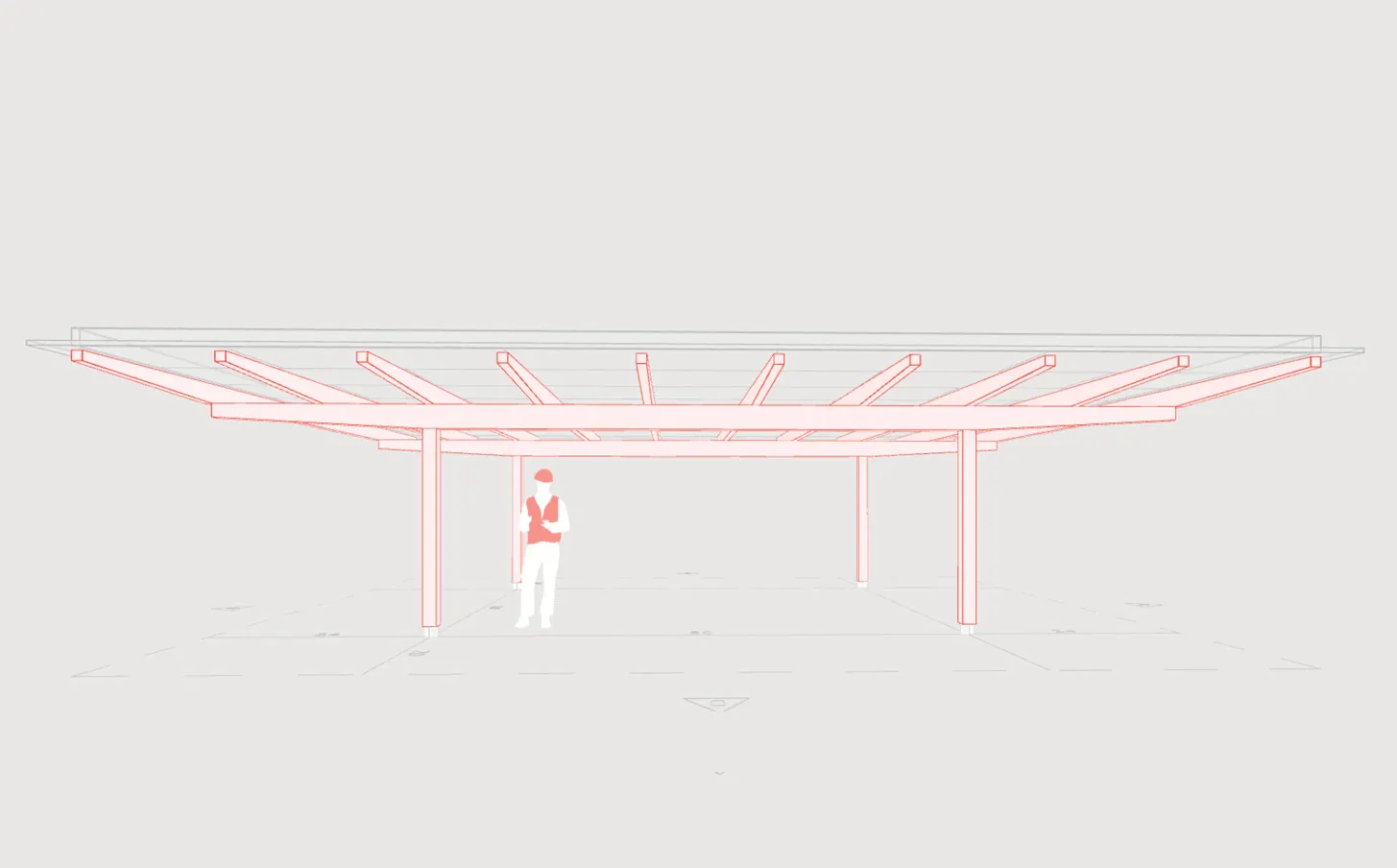
Источник: ArchDaily


